Bonus Buy RTP Drop: How Much Lower Does Your Return Really Go
Slamming the buy button feels like skipping the grind, but the math behind that shortcut is where your bankroll quietly bleeds out. The core mechanism is brutal and simple: when you purchase a bonus round directly, the operator is not selling you the same expected value that the base game carries. They are selling you a convenience premium, and that premium is carved directly out of your theoretical return. The Bonus Buy RTP Drop is not a rumor whispered by salty degens; it is a structural adjustment baked into the paytable the moment you bypass the spin cycle.
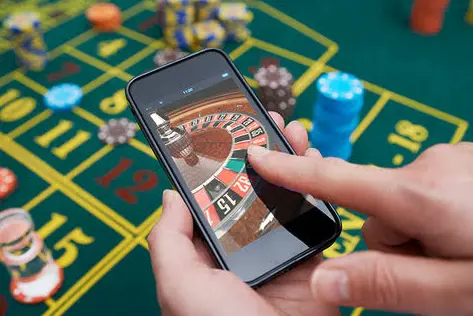
Why the Buy Feature Reprices Your Expected Value
Every slot machine has two distinct mathematical identities. The first is the base game RTP, usually a healthy number between 96% and 97.5%. The second is the bonus buy RTP, and this one is almost always lower, frequently landing between 94% and 96%. Some aggressive configurations drop it to 92% or even 90%. That gap is not an accident. The provider knows that players who buy bonuses are chasing volatility, not grinding volume, so they price the shortcut accordingly. You are paying for the privilege of skipping dead spins, and the house collects its fee in the form of reduced long-term return.
The exact size of the drop depends on the game's internal weighting. A high-volatility title with a massive max win might shave 2.5% off the buy RTP, while a low-volatility slot might only trim 1%. But here is the kicker: some operators stack their own margin on top. The provider sets one buy RTP, and the casino platform adjusts the paytable parameters to shave another fraction. That is how you end up with a buy feature sitting at 91% while the base game advertises 96.5%. The Bonus Buy RTP Drop is therefore a moving target, and the only way to catch it is to read the game rules, not the marketing splash screen.
The Algorithmic Trick Behind the Repricing
Here is where it gets ugly. The bonus round you buy is not the same bonus round you would trigger naturally. Providers often use a separate reel set or a modified weighting table for purchased bonuses. That means the scatter frequency, multiplier distribution, and even the number of free spins can be subtly altered. The Bonus Buy RTP Drop is not just a flat tax; it is a redistribution of outcome probabilities. You are more likely to hit the lower end of the bonus's payout spectrum, and the jackpot-tier outcomes are statistically thinner than they appear in the base game's natural trigger.
This is not conspiracy theory. It is documented in the game's mathematical model, which regulators require providers to publish. The problem is that most players never look. They see "Buy Bonus" and assume it is the same feature they would otherwise grind toward. It is not. The natural trigger has a different expected value because the base game's spins leading up to it contribute to the overall RTP. When you buy in, you skip those contributing spins, and the provider recalculates the bonus's internal worth to preserve the house edge. The result is a lower return per dollar wagered, plain and simple. 😤
How Much Lower Is It Really
Let us put hard numbers on the table. A typical high-volatility slot with a 96.2% base RTP might offer a bonus buy at 94.5%. That is a 1.7% drop. On a $100 buy, your expected loss jumps from $3.80 to $5.50. Over 100 buys, that is an extra $170 evaporating into the operator's pocket. For a game with a 95% base RTP, the buy feature might sit at 92%, a 3% drop that turns a $100 buy into an expected $8 loss instead of $5.
Some providers are more honest than others. A few maintain the buy RTP within 0.5% of the base game, but those are the exception. The rule of thumb is simple: the more volatile the game, the bigger the drop. If you see a slot advertising a 50,000x max win with a buy feature, assume the buy RTP is at least 2% lower than the base. That is the price of admission for a shot at the moon. 🎰
Reading the Fine Print Before You Buy
Every regulated game must display its RTP, but many operators bury the buy-feature RTP in a submenu or a separate info tab. If you cannot find it, assume the worst. The Bonus Buy RTP Drop is a lever the house pulls to protect its margin, and they have no incentive to advertise it loudly. Your move is to treat every buy button as a separate game with its own math. If the buy RTP is not explicitly stated, do not touch it. That is not caution; that is survival.
The only scenario where a buy feature makes sense is when the drop is negligible and the volatility suits your bankroll. But those scenarios are rare. Most of the time, you are paying a 1.5% to 3% tax for the illusion of control. The math does not care about your feelings. It only cares about the numbers on the paytable, and those numbers are always lower when you skip the grind. 💸